
Tackl Academy · Hooks
Understanding Carp Hook Anatomy
The shape of a hook determines how its point, eye, bend and shank behave as the hooklink tightens. Learn the parts before worrying about brand names or specialist patterns.
By Tackl · Reviewed by TACKL. · Updated 13 October 2026
The five main features
The eye connects the hooklink; the shank runs down to the bend; the gape is the clearance between point and shank; the point initiates penetration; and any barb sits near the point. Wire gauge, point style and eye angle also affect performance.
What the eye angle changes
A straight, in-turned or out-turned eye changes the direction the hooklink leaves the hook. A hook that suits supple braid may not sit properly with stiff mono or fluorocarbon. Check the finished arrangement rather than judging an isolated hook.
Why hook size is not standardised
Within common UK carp sizing, lower numbers generally indicate larger hooks. But a size 6 in one pattern may differ appreciably from another in physical gape and wire gauge. Compare actual dimensions and select for the bait, hooklink and venue.
Inspect before every cast
Check the point and eye for damage after fish, gravel contact or weed. An irregular, rolled-over point or damaged eye warrants replacement. Barbed or barbless options must follow the fishery rules.
Questions
Is a wide gape the same as a curved shank?
No. Gape describes clearance; shank shape describes geometry. A hook can combine a curved shank with a relatively wide gape.
Is bigger always stronger?
Not necessarily. Strength also depends on wire gauge, tempering, design and manufacturing quality.
Related
Shop this on Tackl
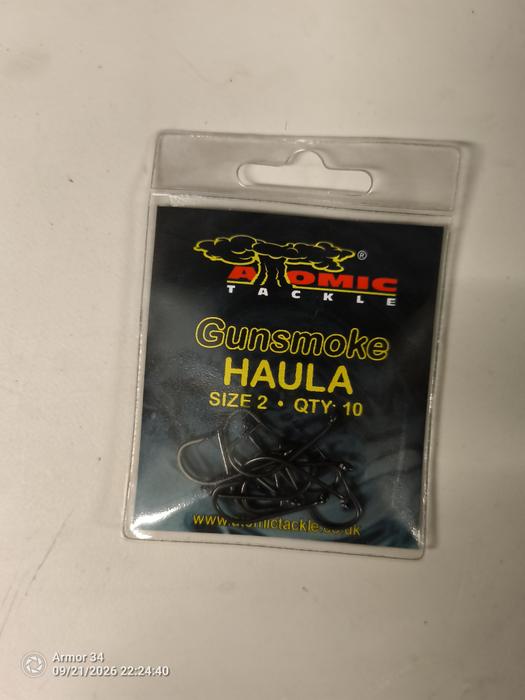
Atomic Tackle haula 2
£2.37New
Sold by Tackl
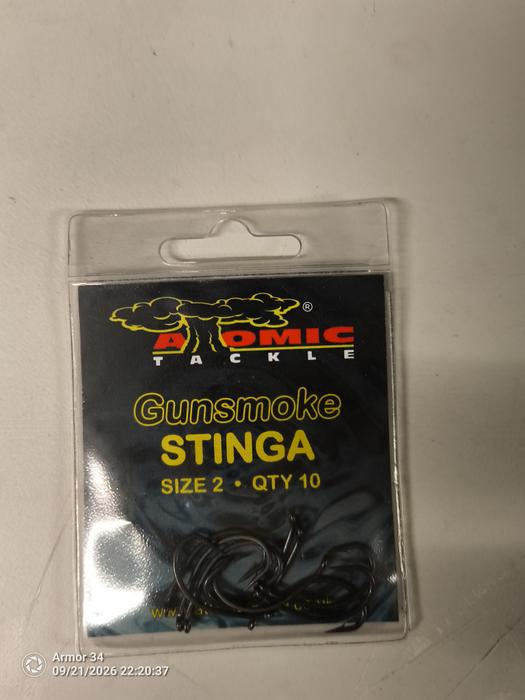
Atomic Tackle stinga 2
£2.37New
Sold by Tackl
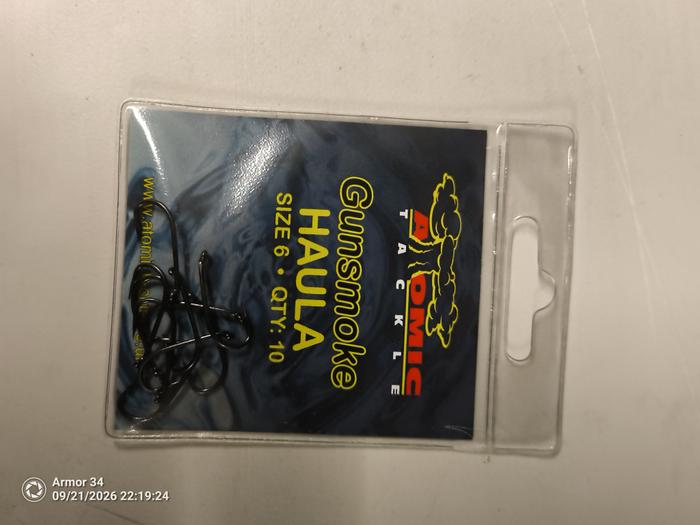
Atomic Tackle haula 6
£2.37New
Sold by Tackl
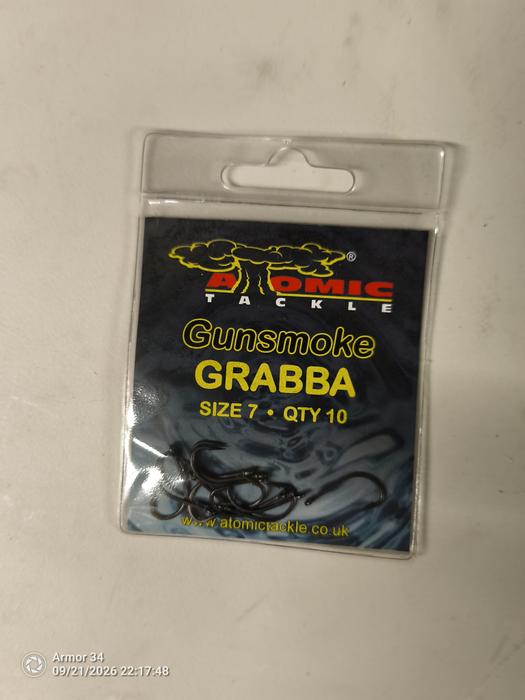
Atomic Tackle Hooks grabba 7
£2.37New
Sold by Tackl
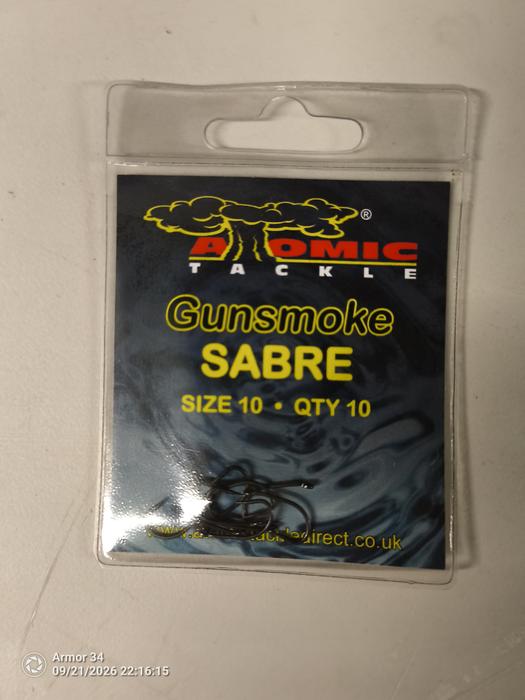
Atomic Tackle Hooks sabre 10
£2.37New
Sold by Tackl
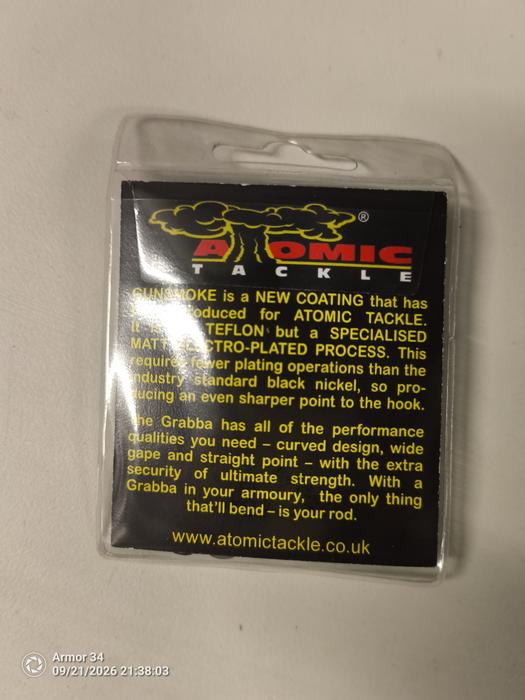
Atomic Tackle claw 4
£2.37New
Sold by Tackl
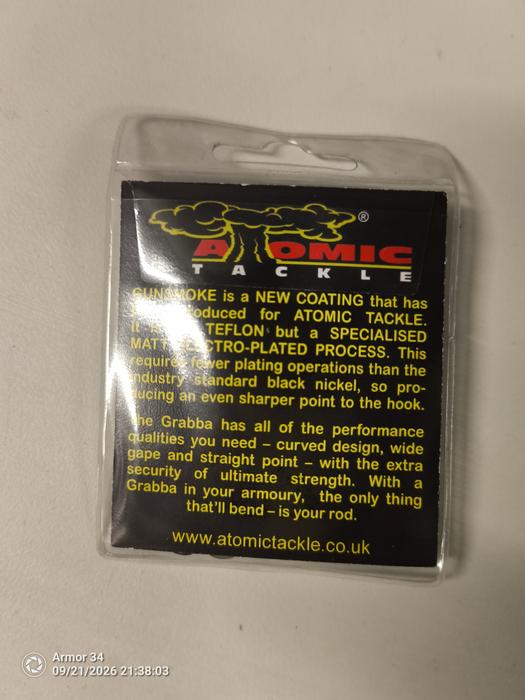
Atomic Tackle Hooks 7
£2.37New
Sold by Tackl
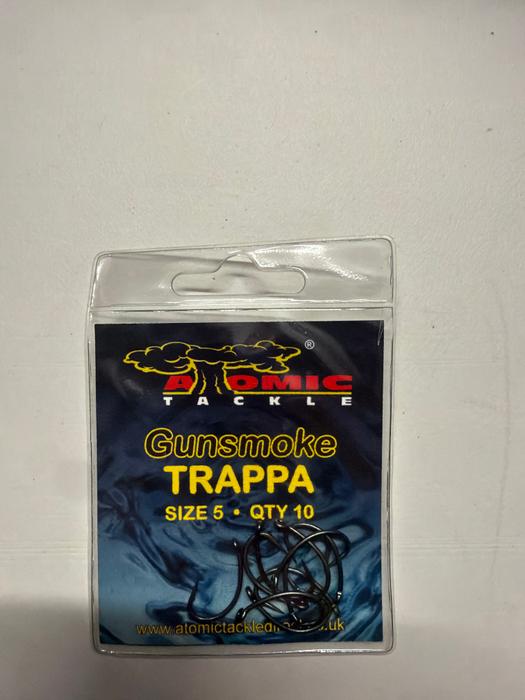
Atomic Tackle Hooks Trappa size 5 Gunsmoke
£2.37New
Sold by Tackl
General guidance, not professional advice. Always follow the venue's rules and current Environment Agency, NRW or Scottish regulations.