
Tackl Academy · Hooks
Wide Gape Hooks for Carp: How to Choose and Use Them
Wide gape hooks are a staple of modern carp fishing because they provide generous clearance between the point and the shank without needing an unusually long hook. They can be used with several straightforward bait presentations and are an excellent pattern to understand before experimenting with specialist rigs. The important thing is not to assume every hook labelled “wide gape” is identical: eye angle, point style, wire gauge and actual dimensions vary between ranges.
By Tackl · Reviewed by TACKL. · Updated 10 October 2026
Wide gape hooks are a staple of modern carp fishing because they provide generous clearance between the point and the shank without needing an unusually long hook. They can be used with several straightforward bait presentations and are an excellent pattern to understand before experimenting with specialist rigs. The important thing is not to assume every hook labelled “wide gape” is identical: eye angle, point style, wire gauge and actual dimensions vary between ranges.
1. What makes a hook wide gape?
The gape is the distance between the hook point and the shank. On a wide gape pattern it is relatively generous for the overall length of the hook. Many examples also have a compact shank, although the exact shape depends on the manufacturer. A short-shank, wide-gape design can give a baited hook sufficient point clearance while remaining compact.
Look closely at five components. The eye is where the hooklink passes through; it may be straight, turned in or turned out. The shank runs towards the bend. The bend curves towards the point. The point may be straight or beaked. The barb , where fitted, affects retention but must comply with fishery rules. These features combine to influence how the hook sits, turns and holds under pressure.
2. Why point clearance matters
When a carp sucks in a hookbait, the rig has only a short opportunity to orientate the hook so the point can make contact. If the bait, hair, line or other rig parts obstruct the point, the pattern cannot work as intended. A generous gape can help, but it doesn't compensate for a blunt point or a badly balanced bait.
A wide gape hook isn't automatically more effective than a curve-shank pattern. Different shapes may suit different hooklink materials and bait presentations. Select it as part of the entire rig, then test how that rig behaves before fishing.
3. Common presentations
Bottom-bait hair rig. A sinking boilie or another suitable bait rests on the lakebed while the hook remains clear. This is a straightforward place to learn wide gape behaviour.
Wafter rig. A buoyancy-balanced bait can reduce the resistance a fish feels as it picks up the bait. Check that the hook and bait settle as intended; a wafter that lifts the hook in one test may behave differently after soaking.
Snowman bait. A sinking bait paired with a buoyant bait can alter the position of the hookbait. Ensure the hook remains unobstructed and the combined bait doesn't overpower your hooklink arrangement.
Pop-up rig. Some wide gape patterns work in approved pop-up systems, but the eye angle and geometry should be chosen for that specific presentation rather than copied from a bottom-bait rig.
4. Choosing a size
Carp hook numbers work in reverse: a size 4 is usually larger than a size 8. However, a size 6 in one range may not match a size 6 from another brand. Compare the physical gape and wire, not only the number on the packet.
Match the hook to the dimensions and buoyancy of the actual hookbait, the hooklink and the expected fish. Small baits do not always require the smallest hook, and large carp do not always require the largest. Pressure from weed and snags, line strength and venue rules can matter more than any simple “bait diameter to hook size” chart. Where anglers suggest size 6 or 8 as a starting point for ordinary boilie presentations, treat it as a trial to test rather than a rule.
5. Straight points, beaked points and wire gauge
A straight point projects towards the hook eye in a relatively direct line. A beaked point curves inward. Both can be effective, and both can become damaged. A beaked point may be less exposed on some hard bottoms, but that is not a licence to ignore abrasion or sharpness. A fine-wire hook may be lighter and suit a subtle presentation; a heavy-wire option may better suit demanding conditions. The hook needs sufficient strength for the tackle and fish you are targeting.
Barbed, micro-barbed and barbless versions may look similar but behave differently during unhooking. Follow venue rules and handle fish carefully regardless of the style used.
6. How to set up and check a simple wide gape presentation
- Select a hook
Choose a quality wide gape pattern of suitable size, wire gauge and barb type for the fishery.
- Inspect the point and eye
Look for a rolled tip, damaged finish or sharp edge that might cut the hooklink.
- Select the hooklink
Choose an appropriate supple, coated or other compatible material based on the lakebed and full rig.
- Tie a secure hook section
For a conventional hair rig, a correctly tied knotless knot is a common method. Confirm that the final eye exit and whipping suit the hook.
- Position the hair
Attach the bait and check how far it sits from the bend. It must not trap the hook point or pull the hook into an unnatural position.
- Test in water
Lower the rig into a margin or clear container and see how it settles. Adjust rather than guessing how a wafter will behave.
- Check the full lead arrangement
The hook section and lead system must be compatible and fish-safe following a breakage.
- Inspect after retrieval
Replace or retie anything damaged, and re-check the hook's sharpness after gravel, snags or a landed fish.
7. Wide gape versus other hook patterns
| Hook type | General characteristic | Often considered for |
|---|---|---|
| Wide gape | Good point clearance; often compact | Basic hair rigs, bottom baits, wafters |
| Curve shank | Curved section alters rotation | Selected balanced and specialist presentations |
| Long shank | Longer lever between eye and bend | Particular rigs that require care with hook holds |
| Out-turned eye | Eye angle suits some stiff filaments | Chod and Hinged Stiff hook sections |
This comparison describes tendencies, not guarantees. Actual designs and fishery rules take priority.
8. Common mistakes to avoid
Using a hook that is too big for the bait arrangement. The bait may not move naturally. Assuming a large gape fixes everything. A poor hair position can still mask the point. Retaining a damaged hook. A rolled point is a false economy. Tying an unsuitable knot against an aggressive eye. Check compatibility. Copying a photograph without testing. Your components may have different dimensions or buoyancy.
Fish welfare and pre-cast safety
Always comply with fishery hook rules, use tackle strong enough for the venue and avoid a setup likely to create unnecessary leverage or poor hook holds. Check the lead can be shed when required after a line break and that no fixed components trap the hooklink or fish. Inspect a hook after every fish and every suspiciously hard retrieval.
Frequently asked questions
Are wide gape hooks only for carp? No. Wide gape is a shape description used across several forms of angling; the correct wire and sizes depend on species and use.
Are beaked points better than straight points? Neither is universally better. Consider the bottom, hook geometry and condition of the point.
Can I use a wide gape with a pop-up? Sometimes, with a suitable proven rig. Do not assume a conventional bottom-bait presentation becomes safe or effective merely by changing the bait.
How do I know a hook is sharp? Examine the point in good light or with a loupe. If it is visibly rolled, blunted, corroded or damaged, replace it. Handle points safely.
Shop the tackle for this guide
Browse Hooks , Hooklinks and Rig Components on Tackl. Match the individual product to the technique and fishery rather than relying on a pattern name alone.
Questions
Barbed or barbless?
Many UK venues insist on barbless or micro-barbed hooks. Check the rules before you tie your rigs.
Related
Shop this on Tackl
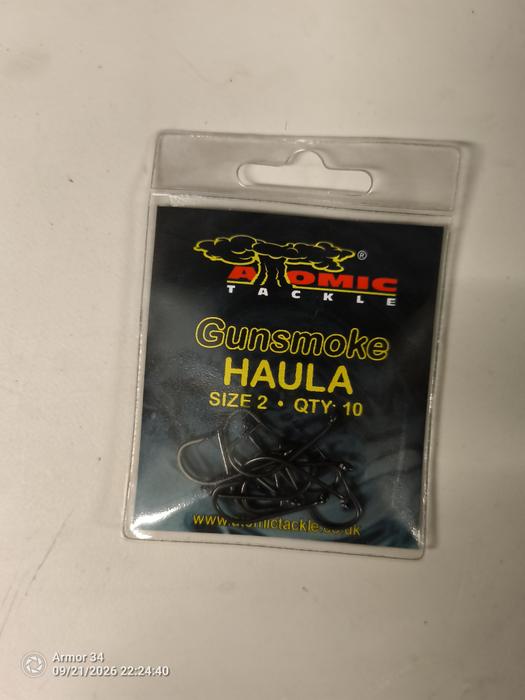
Atomic Tackle haula 2
£2.37New
Sold by Tackl
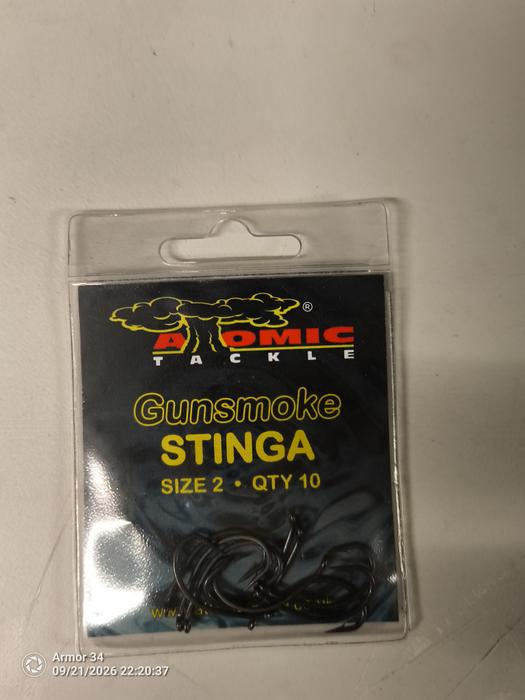
Atomic Tackle stinga 2
£2.37New
Sold by Tackl
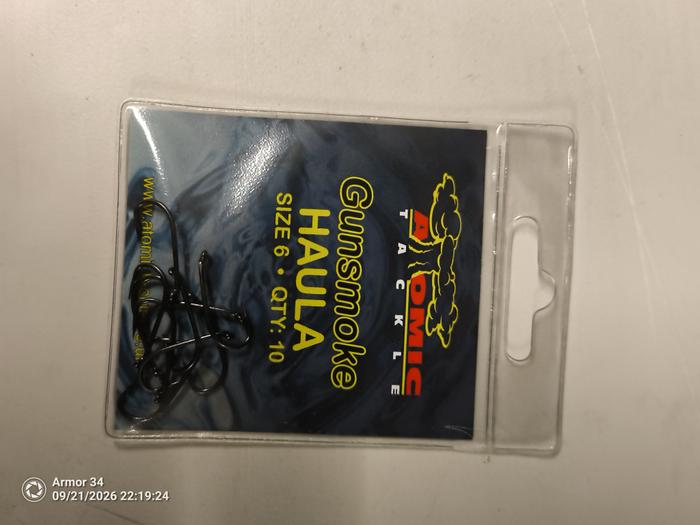
Atomic Tackle haula 6
£2.37New
Sold by Tackl
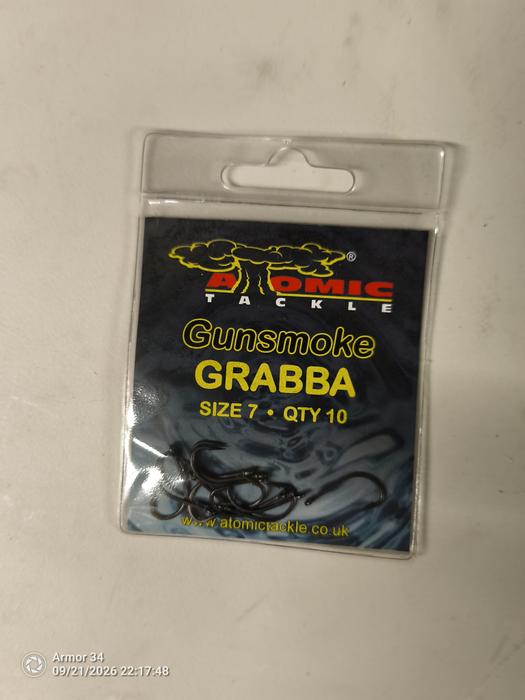
Atomic Tackle Hooks grabba 7
£2.37New
Sold by Tackl
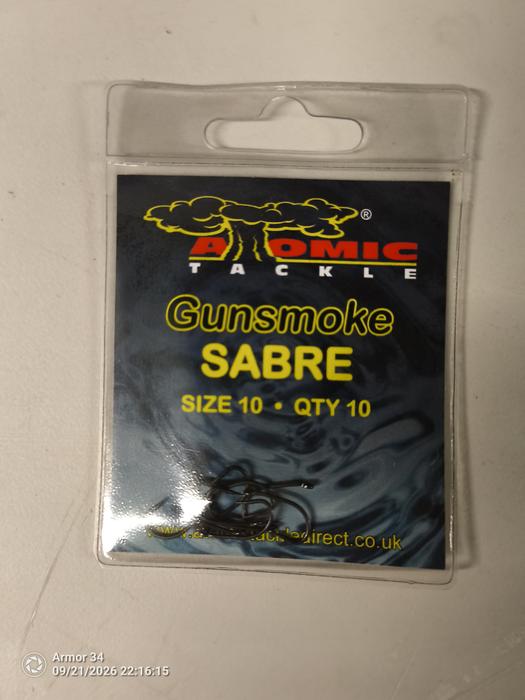
Atomic Tackle Hooks sabre 10
£2.37New
Sold by Tackl
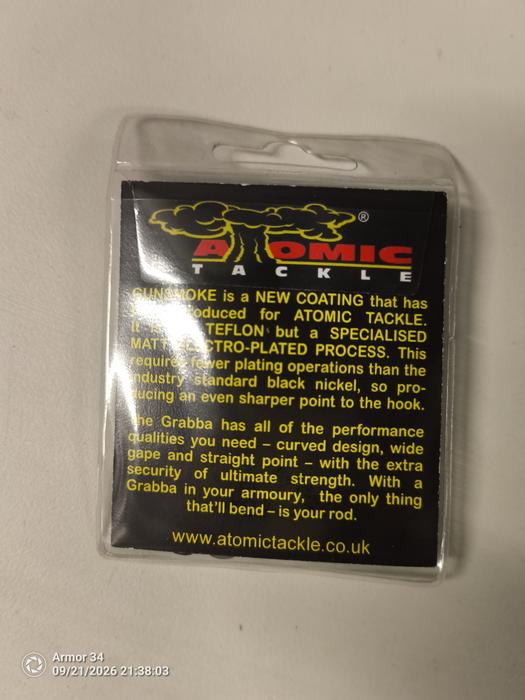
Atomic Tackle claw 4
£2.37New
Sold by Tackl
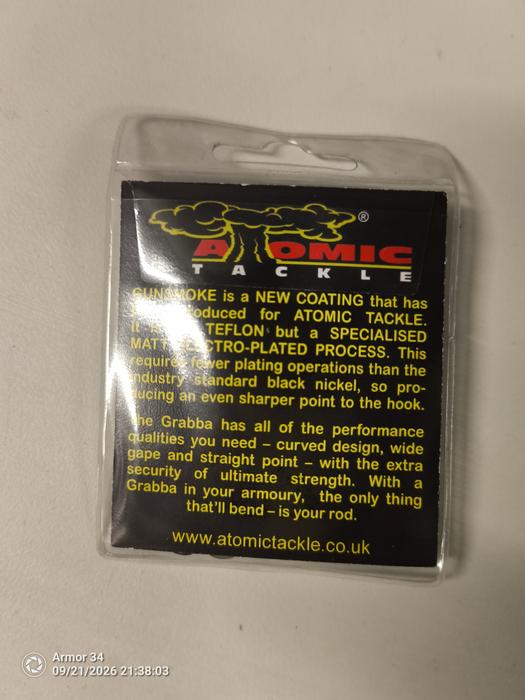
Atomic Tackle Hooks 7
£2.37New
Sold by Tackl
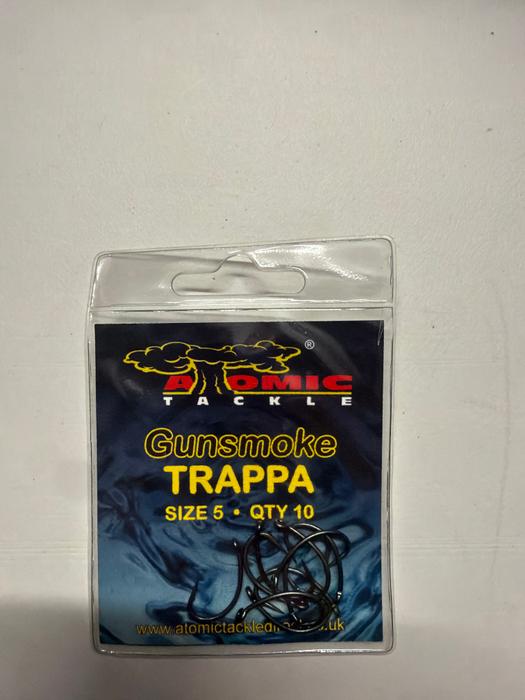
Atomic Tackle Hooks Trappa size 5 Gunsmoke
£2.37New
Sold by Tackl
General guidance, not professional advice. Always follow the venue's rules and current Environment Agency, NRW or Scottish regulations.