

Sea Trout Fishing UK
By Tackl · Updated 30 October 2026

Salmo trutta morpha trutta
The sea trout is the anadromous (sea-migrating) form of the brown trout. Prized by game anglers for its elusive nature and powerful fight, it spends its adult life feeding at sea before returning to its natal river to spawn, often undertaking its upstream journey under the cover of darkness.
Photo: No machine-readable author provided. Wolfgang Striewski assumed (based on copyright claims)., Public domain, via Wikimedia Commons
- Typical size
- 1-2lb for first-return 'finnock' or 'herling', with adult fish typically 3-7lb. A fish over 10lb is a specimen.
- British record
- 28lb 5oz (12.84kg) - Dr J. A. F. Wood, River Leven, 1989
- From the shore
- Estuaries, beaches
- Found in
- river, estuary
- Peak season
- Summer and autumn nights
How to identify a sea trout
Distinguished from resident brown trout by a brilliant silver flank, looser scales, and fewer, smaller spots, which are often X-shaped and concentrated above the lateral line. Compared to a salmon, the sea trout is generally stockier with a thicker tail wrist (caudal peduncle). Its tail fin is squarer and less forked, and its mouth is larger, with the maxillary bone extending back beyond the rear of the eye. A sea trout will usually have profuse spotting below the lateral line, whereas a salmon typically does not. The adipose fin on a sea trout often has a reddish tinge, unlike the grey, unspotted fin of a salmon.
Where it lives
Sea trout are born in clean, well-oxygenated rivers and streams with suitable gravel beds for spawning. After a juvenile period of 1-4 years, they migrate to sea, inhabiting coastal waters and estuaries to feed and grow. They are found in river systems throughout the UK, but are most prolific in Scotland, Wales, the West Country, and North West England. On their return to freshwater, they rest in deep, shaded pools or under submerged structures during daylight hours. At night, they move into faster, shallower water such as glides and the tails of pools to continue their upstream migration.
What it eats and the best baits
At sea, sea trout are active predators, feeding voraciously on sandeels, sprats, small herring, and various crustaceans. Upon re-entering freshwater for their spawning migration, their feeding impulse largely ceases. However, they can still be induced to take a bait or lure, often out of aggression, territorial behaviour, or residual instinct. In the river, they may occasionally take aquatic insects, shrimps, or small fish, but they do not feed consistently to gain condition.
- Tube Flies
- Stoat's Tail
- Teal, Blue and Silver
- Alexandra
- Silver Stoat
- Mepps Spinner
- Toby Spoon
- Rapala Plug
- Lobworm
Best time of year
- Jan – quieter
- Feb – quieter
- Mar – quieter
- Apr – quieter
- May – good
- Jun – good
- Jul – good
- Aug – good
- Sep – good
- Oct – good
- Nov – quieter
- Dec – quieter
The sea trout season is not uniform and does not follow the coarse fishing close season. Dates are set by regional byelaws and vary significantly from river to river. It is a legal requirement to check the specific rules for the river you intend to fish.
Typical best months for shore anglers in England and Wales. What's in season
How to catch sea trout
The classic method is fly fishing at night. This involves casting large, dark, bushy flies (e.g., tube flies, Stoat's Tail) across the current and letting them swing around to the angler's bank, often on a floating or intermediate line. Anglers target known holding pools and the faster 'runs' and 'glides' that fish use to travel. During the day, especially in high or coloured water, spinning can be very effective. Spoons (e.g., Toby), spinners (e.g., Flying C), and shallow-diving plugs are cast upstream and retrieved just fast enough to work correctly. In spate conditions, upstream worming with a bunch of lobworms (where permitted) can be a deadly tactic. Modern lure fishing with soft plastics on jig heads is also gaining popularity for daytime fishing.
Size and bag rules
Migratory — licence and local rules apply
We haven't confirmed a sea trout size or bag limit from an official source yet. Check: Northumberland IFCA, North Eastern IFCA, Eastern IFCA, Kent & Essex IFCA, Sussex IFCA, Southern IFCA, Devon & Severn IFCA, Cornwall IFCA, Isles of Scilly IFCA, North Western IFCA, Wales, Scotland, Northern Ireland.
Rules change, especially for bass: always check the official source before keeping a fish. All sea fishing rules
Best shore marks for sea trout
Legal notes
In England and Wales, you must have a migratory fish (salmon and sea trout) licence from the Environment Agency. In Scotland, regulations are managed by local District Salmon Fishery Boards. Always check local byelaws, as many rivers have mandatory catch-and-release policies, method restrictions (e.g., single barbless hooks), and specific size limits.
Rules change. Check current Environment Agency, NRW or Scottish regulations and the venue's own rules before fishing. Not professional or legal advice.
Where to catch sea trout in the UK
Counties with sea trout recorded on Tackl: Cornwall (1).
1 venue in 1 county
Cornwall(1)
- Coombe Mill Family Farm HolidaysReported
Tackle for sea trout
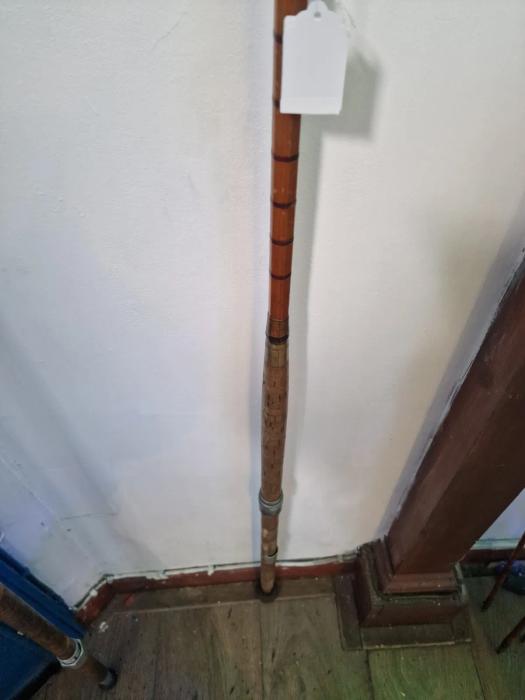
Hardy 15ft 3 piece Fly Fishing Rod (Split Cane)
£200.00
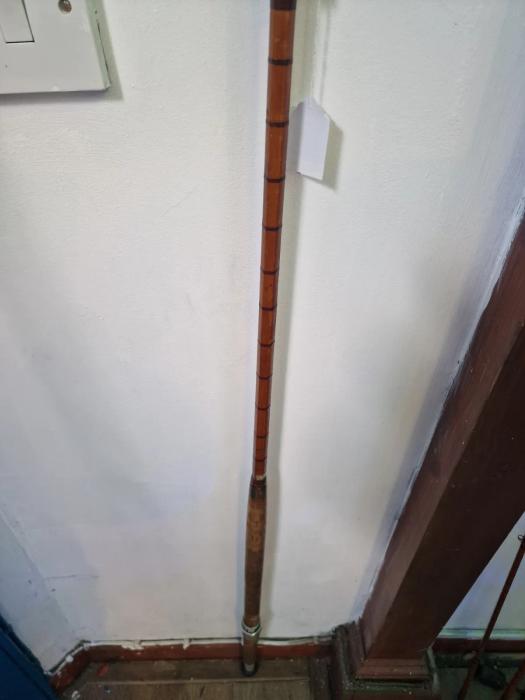
Hardy (Split Cane) 12ft 3 piece Fly Fishing Rod with spare tip
£400.00
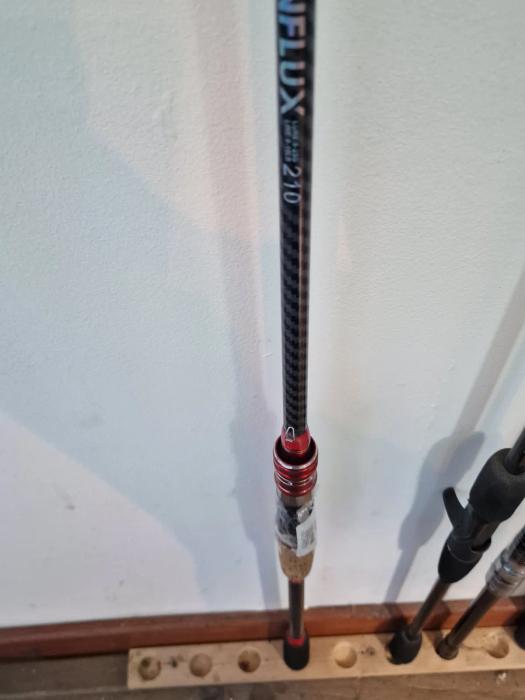
Sylvanflux 210 2 piece Spinning / lure Fishing Rod
£39.99
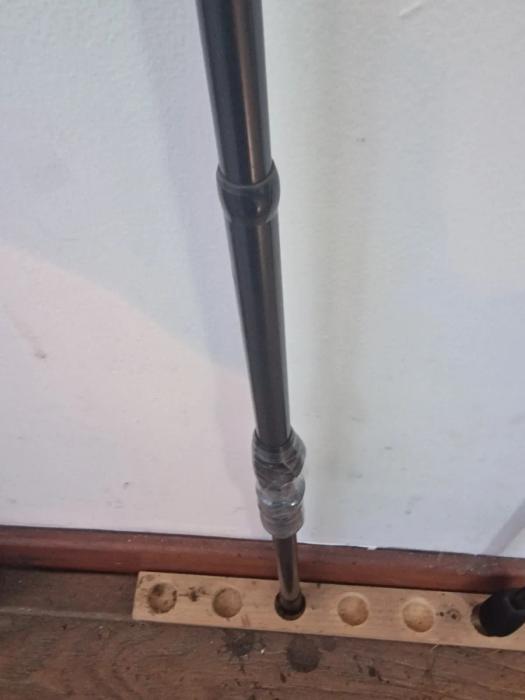
gotuda spin 210 2 piece Spinning / lure Fishing Rod
£31.99
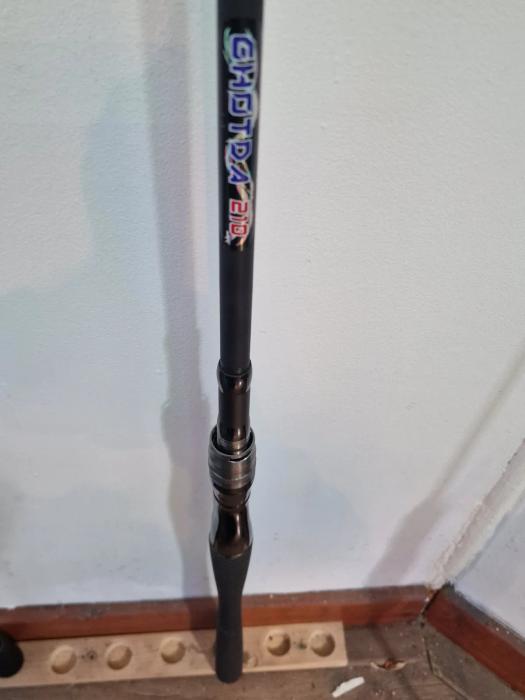
Gotoda 210 2 piece Spinning / lure Fishing Rod
£39.99
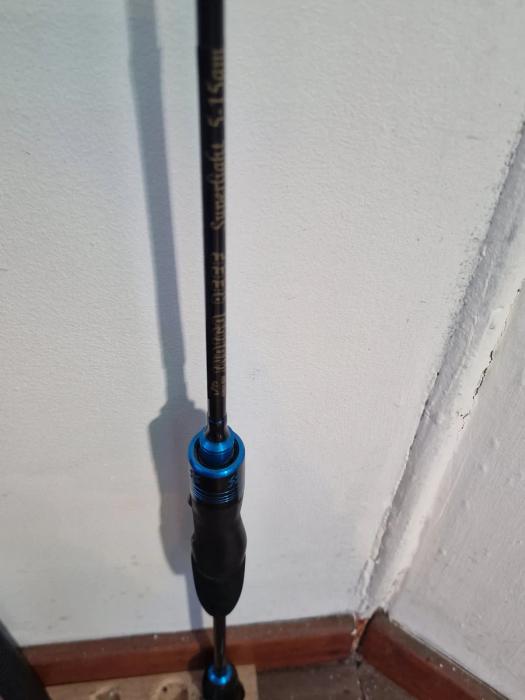
indigo reef 190 2 piece Spinning / lure Fishing Rod
£29.99
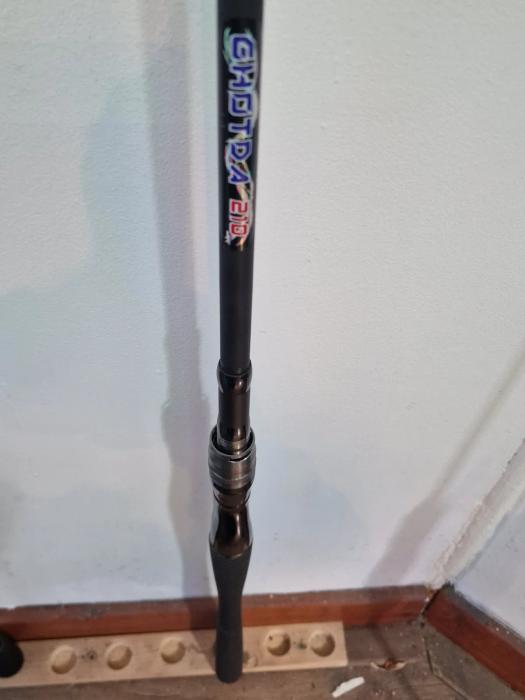
Gotuda 210 2 piece Spinning / lure Fishing Rod
£39.99
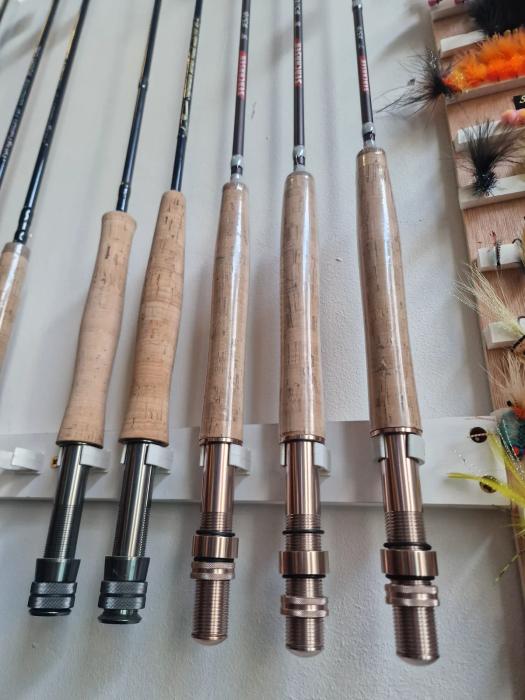
Seachaser Fly Fishing Rod
£59.99
Sea Trout fishing questions
What is the difference between a sea trout and a brown trout?
They are the same species, Salmo trutta. Sea trout are simply the anadromous form that migrates to the sea to feed. This marine life results in a larger average size, faster growth, and a distinct bright silver appearance compared to the river-resident brown trout.
Why is night fishing the most popular method for sea trout?
Sea trout are extremely cautious in daylight and will hold up in deep, safe lies. They become far more active after dark, moving into shallower water to travel upstream, making them more confident, aggressive, and likely to intercept a swinging fly or lure.
Do I need a special licence for sea trout fishing in the UK?
Yes. In England and Wales, you need a full Environment Agency migratory fish licence. In Scotland, regulations are set by District Salmon Fishery Boards. You must also have permission from the fishery owner and adhere to all local byelaws, which are paramount.
What is a 'sewin'?
'Sewin' is the Welsh name for sea trout. Similarly, in the South West of England they are often called 'peal'. These are just regional names for the same fish, Salmo trutta, reflecting the species' cultural importance in those areas.
Must I release all sea trout I catch?
This depends entirely on local byelaws, which can change annually to protect stocks. Many rivers mandate catch and release for the entire season or for fish of a certain size. Always check the specific, current rules for the river you are fishing before you start.


