

Pollack Fishing UK
By Tackl · Updated 30 October 2026

Pollachius pollachius
Pollack are bronze-green predators of rocky coasts, famous for their crash-diving fight as they bolt for the kelp. They are one of the best UK shore species for lure fishing, taking soft plastics, metals and float-fished baits from rocks and harbours, and they are a favourite for anglers who like an active, mobile style of fishing.
Photo: Wilhelm Thomas Fiege, CC BY-SA 4.0, via Wikimedia Commons
- Typical size
- 1–4lb from the shore; a fish over 6lb is a specimen.
- From the shore
- Rocks, harbours
- Found in
- sea
- Peak season
- Spring to late autumn
How to identify a pollack
Pollack have a long, streamlined body with a bronze, olive or greenish-brown back and paler, golden flanks. The lower jaw clearly juts out beyond the upper jaw and there is no chin barbel. The lateral line is dark and curves up noticeably over the pectoral fin. Coalfish, also called saithe, are the main look-alike: they have a straight pale lateral line, jaws that are roughly level, a darker back and often a tiny barbel in small fish. Cod and pouting have prominent barbels and quite different colouring.
Where it lives
Pollack live around rocky reefs, kelp beds, wrecks and harbour walls, often in water with good clarity and plenty of cover. From the shore they are caught off rock marks with deep water close in, breakwaters, harbour walls and piers alongside rough ground. They are most common on the western side of the UK: the south-west of England, Wales, western Scotland and Ireland are especially good, while they are scarcer along much of the North Sea coast.
What it eats and the best baits
Pollack are ambush predators that feed on small fish such as sandeels, sprats, juvenile wrasse and pouting, plus prawns and squid. Lures work because they imitate fleeing baitfish and trigger the pollack's instinct to strike upwards. Live or freshly killed sandeel is a natural food, while ragworm, especially when float fished or trotted near weed, wriggles enticingly and attracts smaller pollack.
- Soft plastic lures
- Sandeel
- Ragworm
- Metal lures
- Mackerel strip
- Prawn
Best time of year
- Jan – quieter
- Feb – quieter
- Mar – quieter
- Apr – good
- May – good
- Jun – good
- Jul – good
- Aug – good
- Sep – good
- Oct – good
- Nov – good
- Dec – quieter
In season now. Typical best months for shore anglers in England and Wales. What's in season
How to catch pollack
Spinning and lure fishing are the most popular methods. A 9 to 10ft spinning rod rated around 10 to 40g with braid suits most rock marks; lighter LRF gear works for small harbour fish. Soft plastic shads and sandeel imitations on jig heads of 10 to 30g are hard to beat, counted down near the kelp and retrieved slowly with the odd pause. Metal lures and spoons cover more water in a tide race. Float fishing a live sandeel or ragworm on a size 2 to 1/0 hook just above the weed is deadly too. Dawn and dusk are prime times, as pollack move up in the water in low light, and the flood or a run of tide past a headland is often best. Takes on lures are a solid thump; then the fish dives hard for the weed, so keep the rod up and give little line at first.
Size and bag rules
| Area | Rule | Source |
|---|---|---|
| Kent & Essex IFCA | Minimum size 30cm | Official page |
| North Western IFCA | Minimum size 30cm | Official page |
Other areas (no confirmed number for this species yet): Northumberland IFCA, North Eastern IFCA, Eastern IFCA, Sussex IFCA, Southern IFCA, Devon & Severn IFCA, Cornwall IFCA, Isles of Scilly IFCA, Wales, Scotland, Northern Ireland.
Rules last checked 23 October 2026. Rules change, especially for bass: always check the official source before keeping a fish. All sea fishing rules
Handling and release
Handle pollack with wet hands and support their body, avoiding holding them up by the jaw or gill cover. Unhook quickly with pliers or forceps; barbless hooks or single hooks on lures make release easier. Pollack caught from deep water can suffer from pressure changes, so return them promptly and head first. Only keep what you need.
Best shore marks for pollack
- Brixham Breakwater, Devon
- Dover Admiralty Pier, Kent
- Falmouth, Cornwall
- Filey Brigg, North Yorkshire
- Flamborough, East Yorkshire
- Llandudno Pier, Conwy
- Looe Banjo Pier, Cornwall
- Mull of Galloway, Dumfries and Galloway
- Penmon Point, Anglesey, Anglesey
- Plymouth Hoe, Devon
- Porthleven, Cornwall
- Portland Bill, Dorset
Where to catch pollack in the UK
We don't have venues confirmed for pollack yet. Browse all venues.
Tackle for pollack
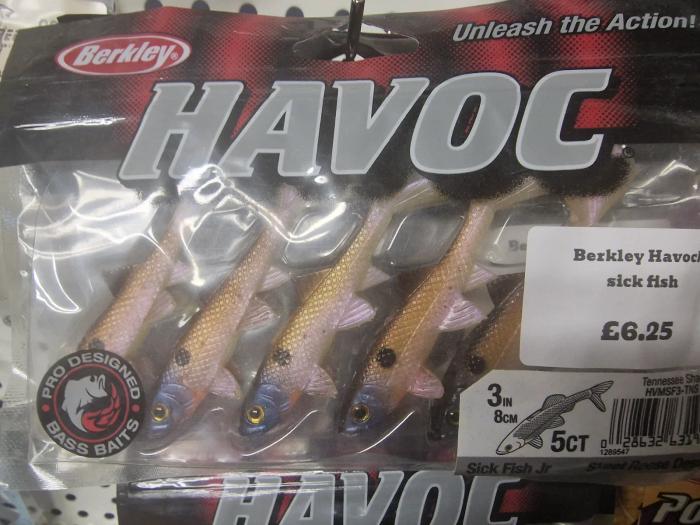
Berkley Havoc perch sick fish lure for bass/ Pike
£6.25
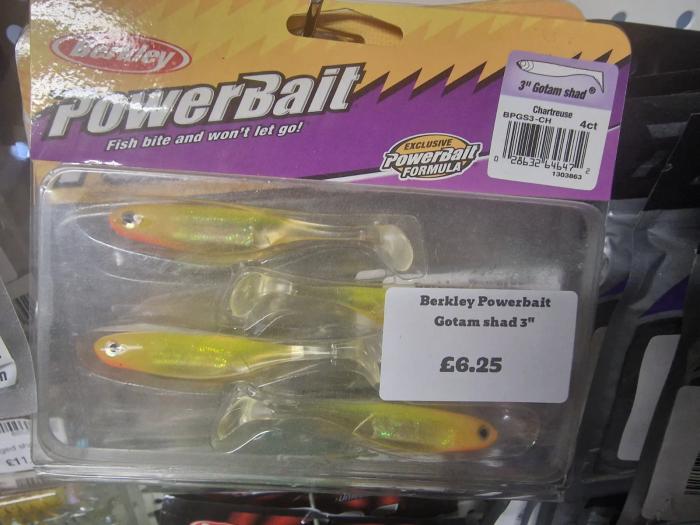
Berkley Soft Plastic / Shad Fishing Lure
£6.25
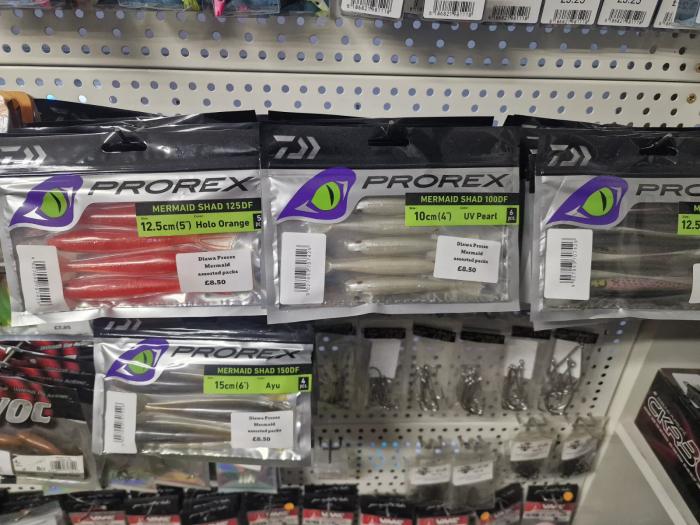
Daiwa Soft Plastic / Bass Fishing Lure Prorex mermaid
£8.50
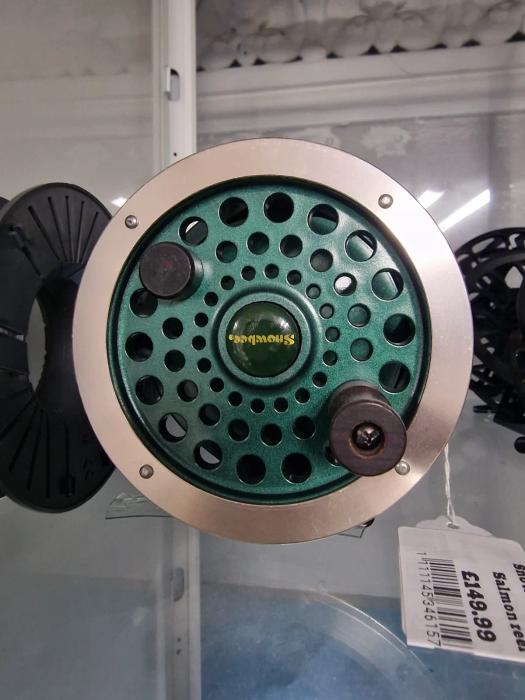
Snowbee Fly Fishing Reel
£149.99
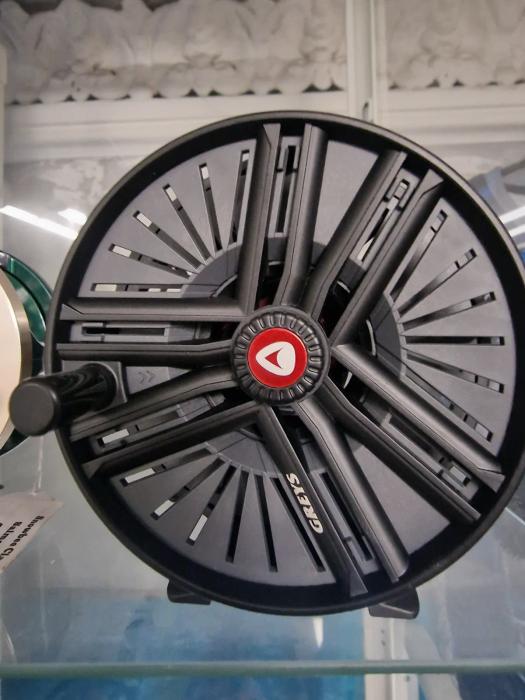
Fishing Reel Greys fin Cassette salmon
£59.99
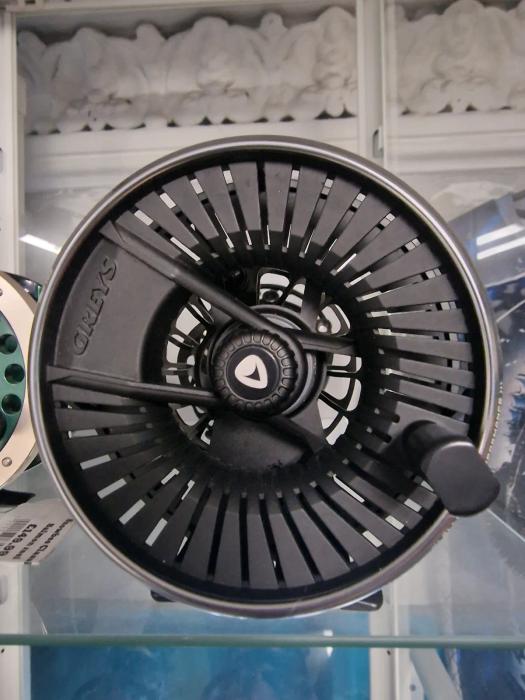
Greys Fly Reel Fishing Reel
£59.99
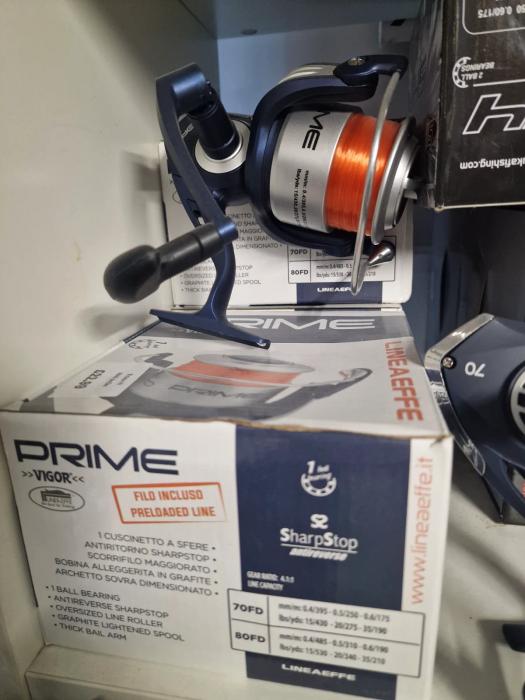
Lineaeffe Spinning 7000 Fishing Reel
£19.99
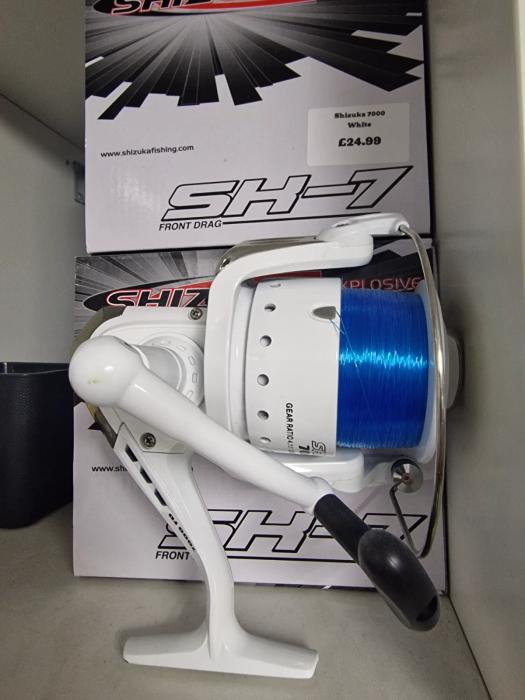
Shizuka Big Pit 7000 Fishing Reel
£23.99
Pollack guides
Pollack fishing questions
How do I tell a pollack from a coalfish?
Look at the lateral line and jaws. Pollack have a dark lateral line that curves over the pectoral fin and a lower jaw that juts out. Coalfish have a straight, pale lateral line, jaws roughly level and a darker back. Small coalfish may also show a tiny chin barbel.
What is the best lure for pollack from the shore?
Soft plastic shads and sandeel imitations on jig heads are the most consistent, worked slowly near the kelp. Natural colours like silver, olive and brown are reliable, while dark lures can work at dusk. Metal jigs and spoons are useful for reaching fish in deeper or fast water.
Can you eat pollack?
Yes, pollack has firm white flesh that is good in fish cakes, curries and battered dishes. It is best eaten fresh as it can go soft if kept too long. Larger pollack are slow to grow, so many anglers return them. Check the size and bag rules for your area below.


